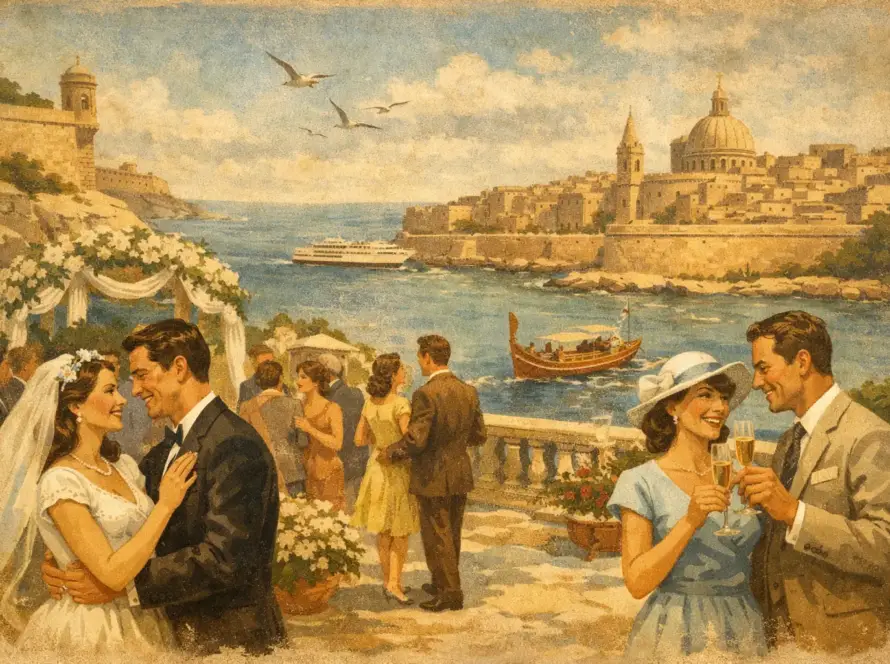
A sunset ceremony overlooking the Maltese coastline feels even more special when your favourite people can return to a welcoming room nearby, rather than searching for taxis or navigating unfamiliar roads at midnight. Knowing how to plan wedding room blocks gives your guests that comfort while protecting the relaxed, beautifully organised rhythm of your destination celebration.
For an international wedding, accommodation is not simply a practical detail. It shapes how long guests stay, whether they join pre-wedding dinners and post-wedding brunches, and how connected the whole celebration feels. The goal is not to place every guest in one hotel at any cost. It is to offer thoughtful choices, clear information and enough flexibility for different budgets.
Start Your Wedding Room Block Plan Early
Accommodation in Malta is in high demand during the warmer months, particularly from late spring through early autumn. Popular coastal areas, historic cities and resort locations can fill quickly around school holidays, public holidays and major events. Begin researching room blocks as soon as your wedding date and general venue area are confirmed – ideally 10 to 12 months before the celebration for a peak-season wedding.
Early planning gives you more than a better selection of hotels. It can also give your guests a wider range of room types, from elegant sea-view suites for close family to simpler rooms for friends travelling on a considered budget. If your date is less than six months away, do not assume it is too late. A well-connected local planner may still be able to identify suitable options, but you may need to be more open about location, hotel style or minimum stay requirements.
Before approaching any property, decide how many rooms you realistically need. Ask invited guests about their likelihood of attending, but treat early replies as an indication rather than a final commitment. A destination wedding may see a smaller attendance rate than a local celebration, yet those who do travel often stay for several nights.
Choose the Right Area, Not Just the Right Hotel
Malta offers wonderfully distinct settings, and the best accommodation area depends on the experience you want guests to have. A hotel near your venue may be the most convenient choice, but it is worth considering airport access, dining options, local character and transport after the wedding.
For celebrations in Valletta, guests may appreciate being close to the city’s historic streets, restaurants and harbour views. For a coastal event, St Julian’s, Sliema or the northern resort areas may suit those hoping to build a holiday around the wedding. A countryside or private-villa celebration can be especially magical, although it may call for planned transfers rather than relying on guests to make their own way.
Think in terms of a comfortable radius rather than a single address. One central hotel can create a lovely sense of togetherness, but it is not always the most practical or affordable option for everyone. Offering a preferred hotel plus one or two nearby alternatives gives guests choice without making the travel arrangements feel scattered.
Consider Your Guest Mix
A room block for a group of friends travelling from the same city will look different from one serving several generations and multiple countries. Older relatives may value lifts, accessible rooms and a quieter setting. Families may need interconnecting rooms or flat-style accommodation. Some guests will want a five-star stay; others will be grateful for a clean, well-located room that leaves more space in their travel budget.
The most gracious approach is to recommend rather than pressure. Your wedding is the reason everyone is travelling, but each guest’s holiday will have its own needs and financial considerations.
Understand the Room Block Terms Before You Sign
A room block is an agreed allocation of rooms held for your wedding guests, usually at a set rate and until a specified release date. The details matter. A lower headline rate is not automatically the better arrangement if the contract is restrictive or requires you to guarantee rooms that may go unbooked.
Ask each hotel whether the block is courtesy-held or contracted. A courtesy block generally holds rooms for a limited period without making you financially responsible for those left unreserved. A contracted block may offer stronger rates or additional benefits, but can require a deposit, a minimum number of rooms or an attrition clause. Attrition means you could be liable for part of the value of rooms not picked up by your group.
Review whether breakfast, taxes, service charges and resort fees are included. Clarify the cancellation terms, check-in requirements and whether guests pay individually or whether you must make a group payment. Also ask whether guests can extend their stay at the group rate, as many will want time to enjoy Malta before or after the wedding.
Do not be afraid to negotiate thoughtfully. Depending on the number of rooms and the season, hotels may be able to offer a complimentary upgrade for the couple, welcome amenities, late check-out or a preferential rate. These additions are lovely, but they should never distract from the essentials: a fair booking policy, appropriate location and a rate your guests can understand.
Set a Room Block That Leaves Breathing Space
It can be tempting to reserve rooms for every guest on your invitation list. In practice, this can create unnecessary financial exposure and leave a hotel holding more rooms than your group will use. Start with the guests most likely to attend: immediate family, wedding party and those who have already expressed firm interest.
For a larger celebration, you may choose a smaller initial block with the option to add rooms if availability permits. This approach is particularly useful in Malta during busy travel periods. The trade-off is that later additions may not receive the same rate or may be limited to certain room categories, so make the first release to your closest guests promptly.
A good planner can help you balance these risks, using your guest list, season and venue location to estimate a sensible starting number. At Dream Days, accommodation planning can sit alongside transport schedules, welcome events and the wedding-day timeline, so the guest experience feels considered from arrival to farewell.
Give Guests Clear, Kind Booking Instructions
Guests do not need a complicated accommodation dossier. They need the hotel name, location, booking method, group code if applicable, price guidance, release date and a gentle reminder to book early. Include this information on your wedding website or in a dedicated accommodation note, and share it as soon as the room block is confirmed.
Be transparent about what is and is not covered. Unless you have chosen to host accommodation, make clear that rooms and flights are booked and paid for directly by guests. If you have secured several options, explain the benefit of each in a few warm, practical lines: closest to the venue, best for families, or a more budget-conscious choice nearby.
The release date deserves particular attention. Phrase it politely but clearly: rooms are held until a certain date, after which availability and rates cannot be guaranteed. Send one friendly reminder around four weeks before that deadline. This is more effective than repeated messages and gives guests enough time to finalise annual leave, childcare and flights.
Plan Transport Alongside Accommodation
A room block works best when it is connected to the rest of the weekend. If most guests are staying in one or two hotels, private coaches or minibuses can make arrival events and the wedding itself wonderfully easy. It also means guests can enjoy a celebratory glass of Maltese wine without worrying about driving.
If accommodation is spread across several areas, designate simple pick-up points and allow generous journey times. Malta’s distances can look short on a map, but traffic and narrow historic streets can affect timing. For a ceremony in a remote location or a reception that finishes late, organised return transport is often a more thoughtful investment than expecting guests to arrange taxis independently.
Keep a Gentle Eye on Bookings
Once the block is open, ask the hotel for occasional pick-up updates, particularly as the release date approaches. You do not need a detailed list of every guest’s booking, and privacy should always be respected. A simple total of rooms reserved will help you decide whether to request more rooms, release unused allocation or remind key guests to book.
Be prepared for exceptions. Some guests may use loyalty points, stay with family or choose a different hotel that better suits their plans. That is entirely reasonable. The purpose of your room block is to make attending easier, not to turn accommodation into another wedding rule.
The most memorable destination weddings feel effortless because the practical details have been quietly anticipated. When your guests know where to stay, how to book and how they will reach the celebration, they are free to focus on Malta’s golden light, the joy of your vows and the privilege of sharing your first days of marriage with you.