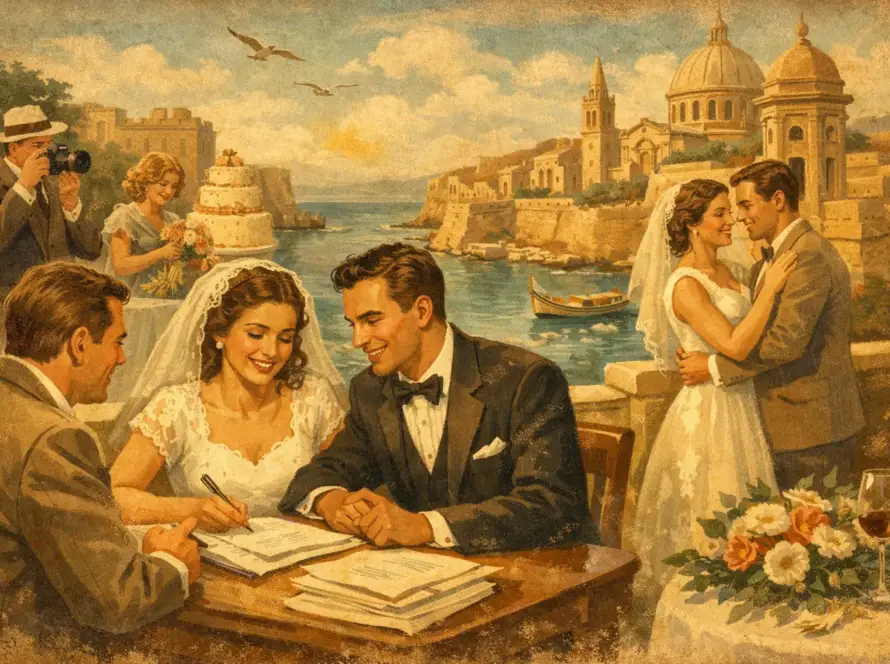
Paperwork rarely feels romantic – until it stands between you and your ceremony in the Maltese sunshine. If you are wondering how to handle Malta wedding paperwork, the good news is that the process is entirely manageable with the right timeline, the correct documents, and calm guidance from someone who knows the local system well.
For international couples, the legal side of a destination wedding can feel more daunting than choosing a venue or finalising your flowers. Malta is a beautiful place to marry, but like any country, it has formal requirements that need to be handled carefully. A missed signature, an out-of-date certificate or a document sent too late can create avoidable stress. The aim is not simply to complete forms – it is to make sure your wedding day feels elegant, joyful and wonderfully uninterrupted.
How to handle Malta wedding paperwork without last-minute stress
The most effective way to approach the legal process is to start early. Couples often assume paperwork can wait until the design decisions are made, but legal preparation should begin much sooner. In most cases, you will need time to gather official documents, check whether they require legalisation or an apostille, and confirm if any item must be translated into English.
What catches many couples off guard is that requirements can vary depending on nationality, marital status and where documents were issued. A British couple marrying in Malta may have a more straightforward route than a couple whose paperwork comes from multiple countries in different languages. That does not mean it becomes difficult – only that it needs a more tailored approach.
A practical first step is to create a single folder, digital and physical, for every legal document linked to your wedding. Keep scans of passports, birth certificates, divorce papers if applicable, and any official correspondence together. When everything is easy to access, approvals and checks move much more smoothly.
What documents are usually needed
The exact list can change, and official guidance should always be checked against your personal circumstances, but most couples should expect to prepare identification documents and civil status paperwork. Passports are generally essential, and full birth certificates are commonly required. If either of you has been married before, you will usually need legal proof that the previous marriage ended, such as a final divorce decree or death certificate.
Some couples may also need sworn declarations or statutory forms confirming they are free to marry. These details matter because Maltese authorities need to be satisfied that the marriage can legally take place and be recognised.
Document condition also matters more than many people realise. Certificates should be clear, complete and consistent. If one document shows a maiden name and another uses a married name, you may need supporting evidence to explain the difference. Even small discrepancies can slow the process if they are not addressed early.
Originals, copies and certified versions
This is one of the most common points of confusion. In some cases, scanned copies may be acceptable at an early review stage, but original documents or certified copies are often needed before final approval. It is wise not to assume that a standard photocopy will do.
If you are ordering replacement certificates from abroad, allow more time than you think you need. International post, public holidays and administrative delays can all stretch the timeline.
Do your documents need translation?
If any of your paperwork is not in English, an official translation may be required. This is particularly important for civil status documents, court records and certificates issued in other languages. The translation usually needs to be formal and accurate rather than informal or self-prepared.
This is an area where couples can lose time, because translation requirements are often discovered halfway through the process rather than at the beginning. If your documents originate from outside the UK or another English-speaking country, check this point as soon as possible.
Timing matters more than couples expect
When considering how to handle Malta wedding paperwork, timing is often the deciding factor between a calm experience and a rushed one. Legal documents are not just about what you send, but when you send it.
Some paperwork may need to be submitted within a set period before the wedding date. Other documents may only be considered valid if they were issued recently. That means there is a balance to strike. Submit too late, and you risk unnecessary pressure. Prepare too early, and a time-sensitive document might expire or need to be reissued.
This is why a personalised planning schedule is so valuable. Rather than relying on general advice alone, couples benefit from a clear calendar showing when to request certificates, when to arrange translations, and when final submissions should be made. It turns a vague legal task into a series of manageable steps.
Religious and civil ceremonies are not identical
Not every Malta wedding follows the same legal route. A civil ceremony and a religious ceremony may involve different procedures, different paperwork or additional permissions. That does not mean one is better than the other, but it does mean the legal pathway should match the kind of celebration you are planning.
For example, church weddings may involve both civil requirements and church-specific documentation. Baptism certificates, confirmation records or permissions from your home parish may be part of the process, depending on denomination and personal circumstances. Couples sometimes assume the church handles everything directly, when in reality there can be both civil and religious steps to complete.
If your ceremony has a spiritual or cultural dimension, it is especially important to confirm requirements early so that the legal and ceremonial parts work together beautifully.
Common issues that cause delays
Most paperwork problems are not dramatic. They are small details that become inconvenient when discovered too late. A certificate may be the short version instead of the full one. A name may be spelled differently across documents. A signature may be missing, or a translation may not meet formal standards.
Another common issue is assuming that requirements in one country will be identical in another. Couples who have attended destination weddings elsewhere may expect the same forms or deadlines in Malta, but each jurisdiction has its own process.
There is also the question of recognition back home. For many couples, it is not enough to marry legally in Malta – they also want confidence that their marriage documents will be accepted in their country of residence. This is usually manageable, but it should be considered early, especially if you will later need your marriage certificate for visas, surname changes or financial administration.
Why expert support makes such a difference
The legal side of a destination wedding can feel dry on paper, yet it shapes how relaxed you feel throughout the planning journey. Working with a Malta-based planner who understands local procedures adds more than convenience. It brings clarity, timing, and the reassurance that nothing essential is being left to chance.
For couples planning from abroad, this support can be especially valuable. You are managing time zones, international documents and unfamiliar administrative expectations while also trying to create a celebration that feels deeply personal. Having someone who can guide the process, flag potential issues early and keep everything moving in the right order is often what turns the experience from stressful to exciting.
This is where a service-led planning approach becomes so helpful. At Dream Days, legal guidance sits alongside design, coordination and venue planning, so the practical details support the beauty of the day rather than competing with it.
A calmer way to prepare
If you are at the beginning of your planning journey, resist the urge to leave paperwork for later simply because it is less enjoyable than choosing your setting or styling. In reality, taking care of the legal side early gives you far more freedom to enjoy the creative parts.
Treat the paperwork as the quiet structure beneath your celebration. It may not be the part guests admire in photographs, but it is what allows the day to unfold with confidence. Gather your documents early, check every detail carefully, and allow enough time for the process to breathe.
When handled properly, Malta wedding paperwork does not overshadow the romance of your destination wedding. It protects it. And once the signatures are complete and every document is in order, you are free to focus on the reason you came here in the first place – to celebrate your love in one of the Mediterranean’s most extraordinary settings.