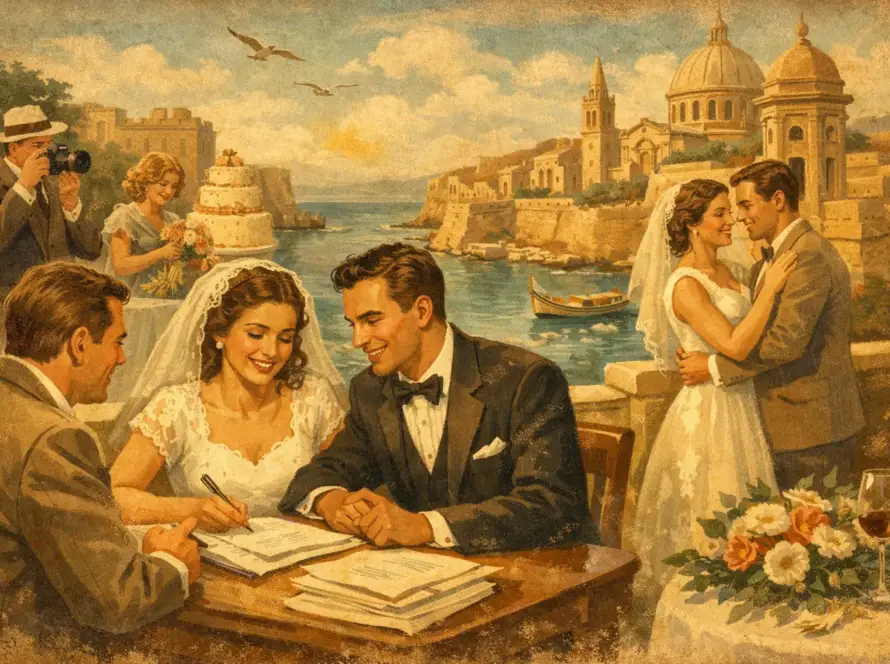
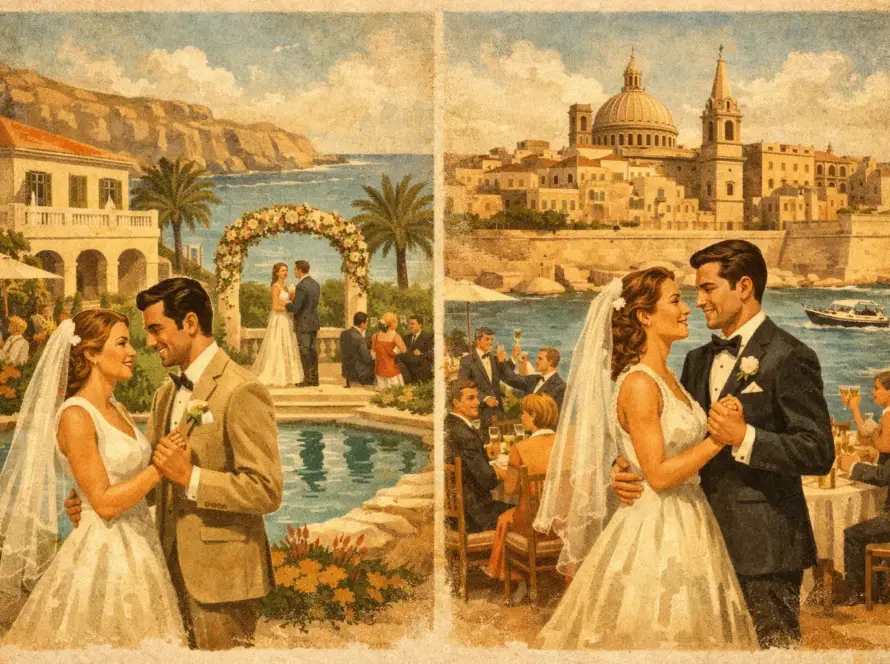
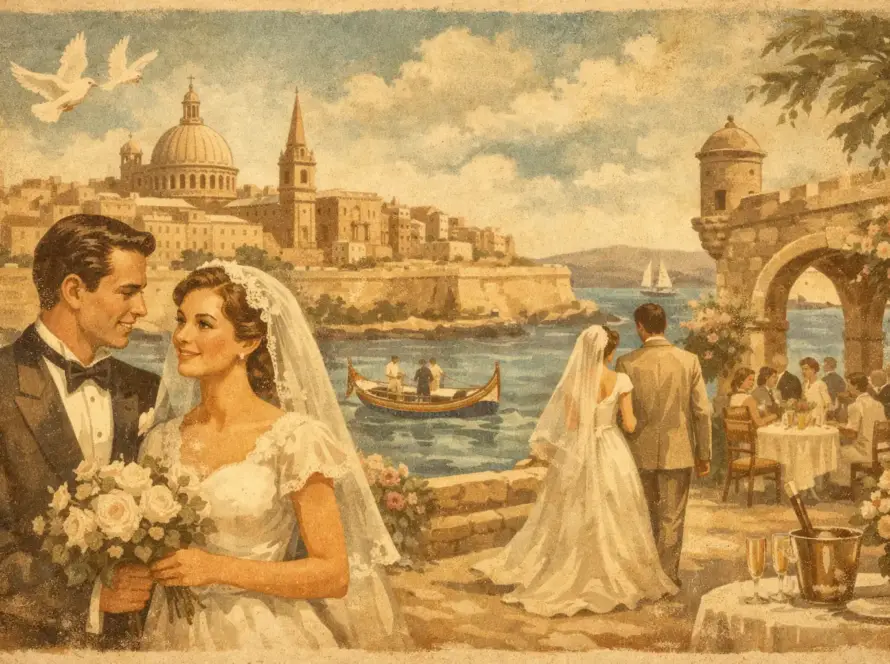
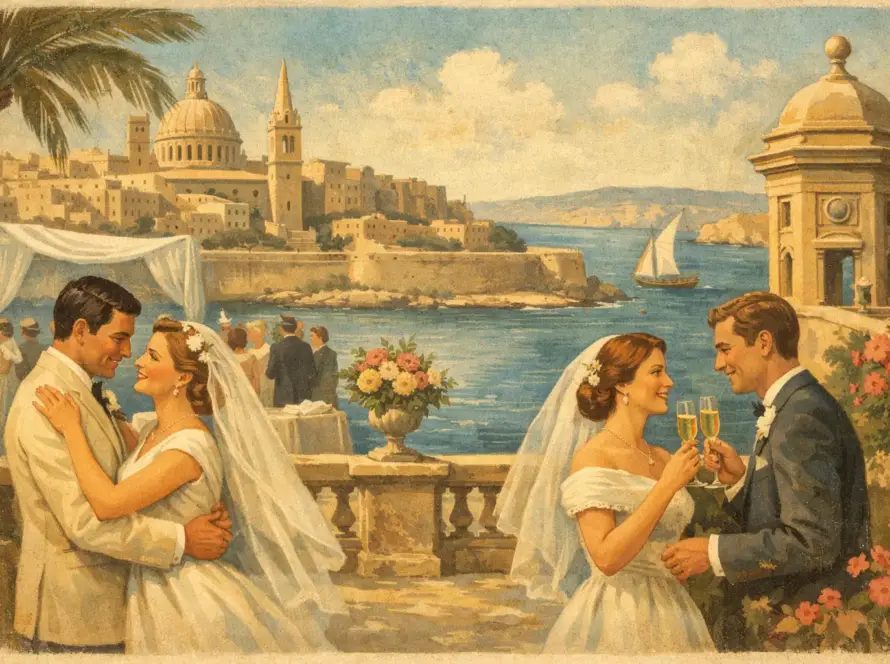
A limestone terrace glowing at sunset, candlelight catching on centuries-old walls, a dinner table beneath olive trees – Malta offers both grandeur and softness in abundance. For couples considering a castle versus garden wedding Malta celebration, the decision is less about which setting is more beautiful and more about how you want your guests to feel from the first welcome drink to the final dance.
A castle brings drama, history and a powerful sense of occasion. A garden creates an intimate, relaxed celebration where the island landscape becomes part of every photograph. Both can be deeply romantic. The right choice depends on your story, your guest list and the rhythm you want for your wedding day.
Castle versus garden wedding Malta: the atmosphere
A castle or historic fortified venue has a presence that needs very little styling to feel extraordinary. Malta’s honey-coloured stone, grand entrances, courtyards and elevated terraces create an instant sense of theatre. This is a wonderful choice for couples who picture a formal arrival, a statement ceremony and an evening that feels timeless rather than trend-led.
These spaces are especially compelling after dark. Architectural lighting, lanterns and candlelit tables can transform a courtyard into a spectacular setting for dinner, while live musicians or a string quartet add to the occasion without competing with the venue itself. The result can feel cinematic, but never artificial: the history is real, and it gives the celebration depth.
A garden wedding offers a different kind of romance. It is less about making an entrance and more about creating a beautiful gathering. Imagine vows beneath mature trees, a floral aisle softened by the afternoon light, and guests moving easily between a lawn, terrace and dining area. The feeling is warm, personal and quietly luxurious.
Gardens suit couples who want their wedding to feel connected to Malta’s natural beauty. Mediterranean foliage, fragrant herbs, bougainvillaea and soft coastal light can shape the design from the outset. Rather than adding abundant décor, the styling can be refined around what is already there – elegant linens, considered florals, beautiful tableware and lighting that lets the landscape remain visible.
Consider the experience for your guests
The most memorable destination weddings are not only beautiful in photographs. They are comfortable, welcoming and easy for guests to enjoy. This is where the practical differences between castle and garden settings become meaningful.
Historic venues can involve stone steps, uneven floors and multiple levels. For many guests, this adds character. However, if parents, grandparents or anyone with limited mobility will be travelling to Malta, access should be discussed early. A thoughtful plan may include transport directly to the entrance, suitable seating, a clear route between ceremony and reception spaces, and a discreet alternative for guests who cannot manage steps comfortably.
Gardens often create a more fluid guest experience, particularly for a daytime ceremony and long, sociable aperitivo. There is room for children to move about, space for outdoor lounge areas, and a natural transition from welcome drinks to dinner. Yet lawns, gravel paths and outdoor furniture still need careful consideration, especially for heels, wheelchairs and formalwear.
Neither option is automatically easier. A well-managed historic venue can feel effortless, while a garden can require detailed planning for surfaces, shade and evening temperature. The key is to design the guest journey rather than simply choosing a pretty backdrop.
Malta’s weather and your seasonal plans
Malta’s long sunny season is a major reason couples choose the island, but an outdoor wedding always deserves a considered weather strategy. Garden celebrations are at their most comfortable in spring and autumn, when the light is beautiful and the midday heat is gentler. In the height of summer, a later ceremony, shaded welcome area and refreshing drinks become essential rather than optional details.
Castle venues can offer welcome relief from direct sun through covered courtyards, interior rooms or sheltered terraces. Their stone architecture also photographs beautifully in bright light, making them a strong option for couples marrying in warmer months. However, some outdoor historic spaces can become breezy, particularly in elevated or coastal locations, so table décor, hairstyles and sound equipment should be planned accordingly.
For either setting, a Plan B should feel like part of the wedding design, not a compromise revealed at the last minute. This may mean reserving an elegant indoor room, arranging a covered terrace or choosing a structure that complements the overall aesthetic. Rain is uncommon through much of the wedding season, but confidence comes from being prepared for every possibility.
Styling the setting without losing its character
A castle can carry bolder, more formal styling. Long banquet tables, tall floral arrangements, sculptural candles and richly textured stationery sit naturally against historic stone. Jewel tones, ivory, deep green, dusty blue and warm metallic accents all work beautifully, depending on the season and your chosen mood. The best designs still leave room for the architecture to speak.
In a garden, the most successful styling tends to feel collected rather than imposed. Soft colour palettes, locally inspired details and flowers that move gently in the breeze create an organic elegance. You might choose a floral-forward ceremony and simpler tables, allowing the setting to provide the visual richness. Or you may prefer a modern contrast, with clean-lined furniture and contemporary lighting among the trees.
There is no rule that says castles must be grand and gardens must be rustic. A historic venue can be styled with modern restraint, while a garden can host an exquisitely formal black-tie dinner. What matters is that the design feels coherent with your personalities and the experience you want to create.
Budget, logistics and entertainment
Venue costs vary widely, but the headline hire fee is only one part of the picture. A castle may include dramatic spaces that reduce the need for extensive décor, yet may require specialist lighting, power arrangements or additional furniture. Garden venues can be flexible and generous in layout, but may need more infrastructure for a large dinner, dance floor, bar or weather cover.
Entertainment deserves its own conversation. Courtyards can offer wonderful acoustics for a ceremony or dinner performance, although sound restrictions and nearby residences may affect late-night plans. Gardens can provide excellent room for a band and dancing, but outdoor sound limits, generator requirements and the location of neighbours must be checked before falling in love with the idea of a party beneath the stars.
For destination couples, timing is equally important. Consider where hair and make-up will take place, how long transfers will take, where the photographer can work in the best light, and whether guests can move easily from ceremony to reception. These details are where local venue knowledge makes a genuine difference. Dream Days can shape the logistics around your vision, so the day feels calm and beautifully paced rather than over-scheduled.
Which setting suits your celebration?
Choose a castle if you are drawn to heritage, ceremony and a sense of dramatic scale. It is particularly well suited to an elegant evening reception, a sophisticated dress code and couples who want Malta’s architectural history to be central to the celebration.
Choose a garden if you value warmth, natural beauty and a relaxed flow between moments. It is ideal for long lunches, alfresco dinners and celebrations where guests can settle in, mingle and enjoy the landscape around them.
If you love aspects of both, look for a venue with a historic façade and garden or courtyard spaces. Malta has exceptional places where stone architecture, greenery and open-air dining meet, allowing you to create a day with a grand beginning and a softer, more intimate evening.
The most beautiful choice is the one that feels recognisably yours. Begin with the feeling you want to remember – the hush before your vows, the first toast at sunset, the sound of your favourite people laughing around the table – and let the setting bring that feeling to life.