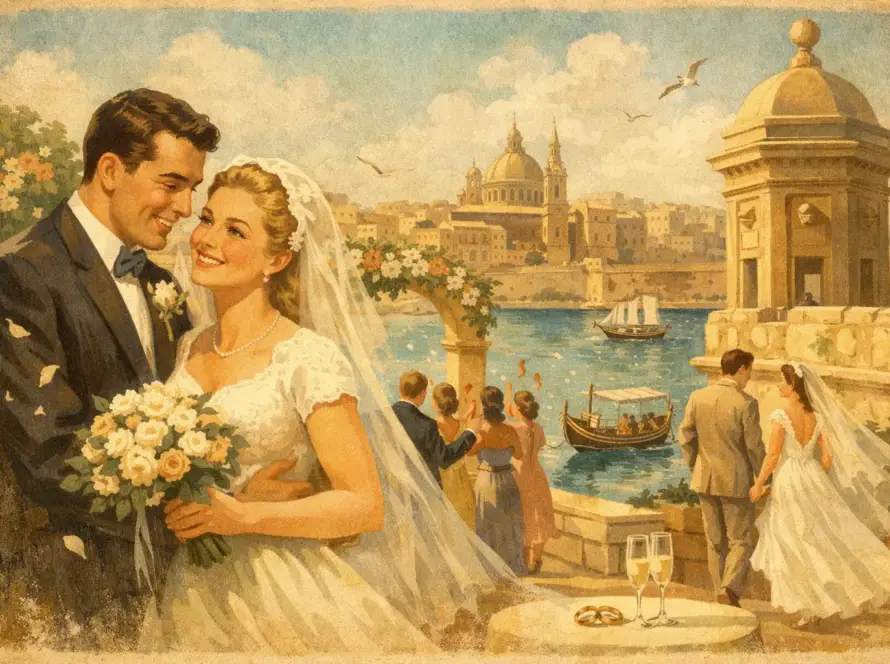
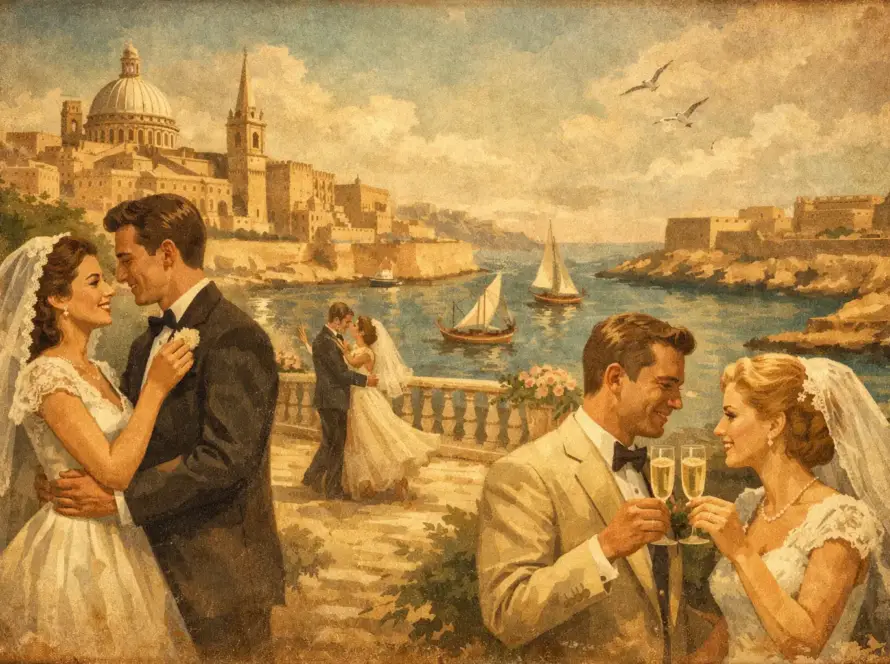
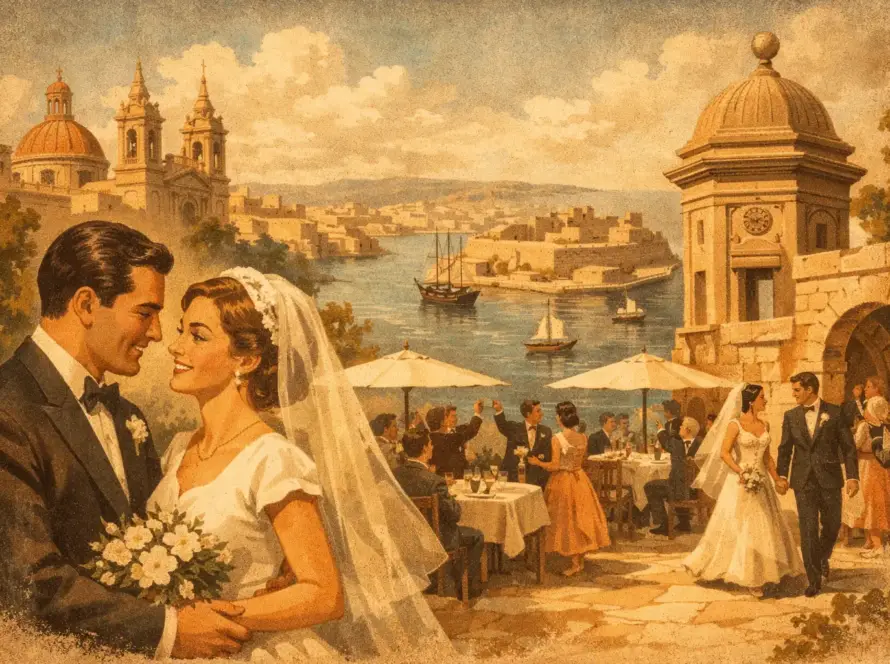
A wedding rehearsal checklist is not about staging a perfect performance the evening before you marry. It is about giving the people you love a calm, confident understanding of where to be, when to move and whom to follow. Against Malta’s honey-coloured stone, sparkling sea and late-afternoon light, that quiet certainty leaves more room for the moment that truly matters: seeing one another at the aisle.
For a destination celebration, a rehearsal also protects the atmosphere you have travelled so far to create. Your guests may be navigating an unfamiliar venue, a different climate and a fuller-than-usual schedule. A considered walk-through turns potential questions into an effortless, beautiful flow.
What your wedding rehearsal should achieve
A good rehearsal is concise, welcoming and practical. Most ceremonies only need 30 to 45 minutes, provided the key people are present and the plan has already been thoughtfully prepared. The aim is not to rehearse every word or recreate the emotion of the ceremony. It is to make the transitions feel natural.
By the end, your wedding party should know the order of the processional, the pace of the walk, where to stand, how bouquets are held during the vows and where to go once the ceremony ends. Your readers and witnesses should understand their cues, while musicians, photographers and the celebrant know the moments that require particular care.
This is especially valuable when your ceremony has personal details woven through it. A family member may be reading a poem, a child may be scattering petals, or a close friend may be holding the rings. Small roles can feel significant to those involved, and a rehearsal gives each person the reassurance to enjoy them.
Wedding rehearsal checklist: prepare before everyone arrives
The smoothest rehearsals begin before the first guest steps onto the terrace or into the chapel. Your planner or coordinator should have the final ceremony order, the confirmed guest count and the contact details for every supplier involved. It helps to print a simple running order for the wedding party, although a clear verbal briefing is often enough for everyone else.
Confirm the people who need to attend
Invite the couple, wedding party, parents or special family members involved in the entrance, readers, witnesses, ring bearer, flower children, celebrant, musicians and coordinator. If someone cannot attend, do not let that create unnecessary worry. A brief call, a marked-up plan or a five-minute briefing on the morning can cover a straightforward role.
The photographer and videographer do not always need to attend a full rehearsal, particularly when they know the venue well. However, they should receive the final ceremony timing and be made aware of any meaningful moments, such as a surprise reading or a family heirloom being presented.
Walk the route from arrival to aisle
Begin where each group will wait before the ceremony. Confirm which entrance will be used, where cars can pull in and who will welcome or guide guests. At a Maltese venue, this may mean allowing for a cobbled approach, a staircase, a courtyard or a short walk between the reception area and ceremony setting.
Then walk each entrance at a relaxed pace. Bridesmaids, groomsmen, parents and the couple do not need to count steps. They simply need to understand the route, the order and the point at which they stop. A slower walk nearly always photographs better and feels more composed than a rushed entrance.
Decide whether attendants stand beside you throughout the ceremony or take their seats after the processional. Neither choice is more correct. Standing creates a strong sense of ceremony and support, while seating the wedding party can keep an intimate ceremony space visually open, especially when the backdrop is a sweeping Maltese view.
Rehearse the essential cues
Run through the processional once, then practise the important handovers and movements. The celebrant should indicate when the couple steps forward for vows, when rings are passed and where witnesses will sign, if signing is part of the ceremony format. Readers need only know where to stand, how to approach the microphone and when to return to their seat.
Music deserves special attention. Confirm which song accompanies each entrance, whether there is a live musician or recorded track, and who gives the signal to begin. If a song has a particular starting point, make this clear. A musician cannot always see the aisle, while a coordinator may be positioned where they can cue the moment precisely.
You do not need to practise your vows aloud unless you want to. Many couples prefer to keep those words private until the ceremony, and there is something lovely about preserving that anticipation.
Details that matter for a Malta destination wedding
Malta’s light is part of its magic, but it also shapes timing. In warmer months, an outdoor ceremony may be more comfortable later in the day, particularly for guests in formalwear and young children. During the rehearsal, notice where the sun will sit, whether sunglasses may be useful before the processional and where water can be placed discreetly.
Wind is another consideration for coastal and rooftop settings. Test any lightweight signage, order-of-service cards, veil placement and floral arrangements. If you are using candles, discuss alternatives or protected holders. These are not reasons to avoid an outdoor ceremony. They are the thoughtful details that allow it to remain elegant whatever the breeze brings.
Travel time deserves equal care. A map may suggest a quick journey, but wedding-day traffic, coach arrivals, narrow streets and parking arrangements can alter the reality. Confirm the final transport plan and build a little breathing space into it. Guests should never feel that they are racing towards your ceremony.
If your celebration includes legal formalities, keep those instructions separate from the emotional flow of the rehearsal. Your planner can ensure the required documents, witnesses and appointments are properly arranged, while the rehearsal itself remains focused on the experience you are creating together.
Give every person one clear responsibility
Too many instructions can make a wedding party feel like an event crew. The better approach is to assign a few simple responsibilities and make it clear who has final authority on the day. At Dream Days, this is the distinction we value most: you and your guests should be present for the celebration, while experienced coordination quietly handles the moving parts.
For a larger ceremony, it is helpful for the following people to know their role:
- A coordinator or trusted point of contact who gives cues and resolves questions.
- One person responsible for the rings until they are needed.
- A family member who can gently guide elderly relatives or children to their places.
- A designated contact for transport, particularly if guests are arriving from more than one hotel.
- A member of the wedding party who knows where personal items, such as a shawl or touch-up kit, have been placed.
Avoid asking either partner to answer logistical questions on the morning. Even the smallest query can pull your attention away from one another. The purpose of careful planning is not control for its own sake. It is space to feel the joy of the day.
What not to rehearse
A rehearsal should offer confidence, not exhaust everyone before the celebration begins. You do not need to practise every photograph, run the entire reception entrance or spend an hour refining the angle of every bouquet. Those details are best guided naturally by your coordinator, photographer and styling team on the day.
There is also no need to force children through repeated walks if they are becoming tired or shy. Show them where to go, let them have a gentle practice if they wish, and prepare a flexible alternative. A flower child who decides to walk hand in hand with a parent is still part of a beautiful story.
If rain is possible, review the wet-weather plan without dwelling on it. Know the indoor or covered ceremony location, the guest route and who makes the final call. Then let it rest. A well-prepared alternative can be just as romantic, particularly in one of Malta’s characterful historic venues.
End the rehearsal with ease
Before everyone leaves, repeat the ceremony start time, arrival time and meeting point. Remind the wedding party to eat, drink water and have their attire ready. Let them know that lateness is the one thing that can unsettle an otherwise relaxed morning, so transport and alarms deserve a final check.
Then release the room. Share a drink, gather for a relaxed rehearsal dinner or simply take a quiet moment together. You have done the practical work. When the music begins and your closest people take their places, you can step forward knowing every detail has been held with care – and that the only thing left to do is marry the person you love.