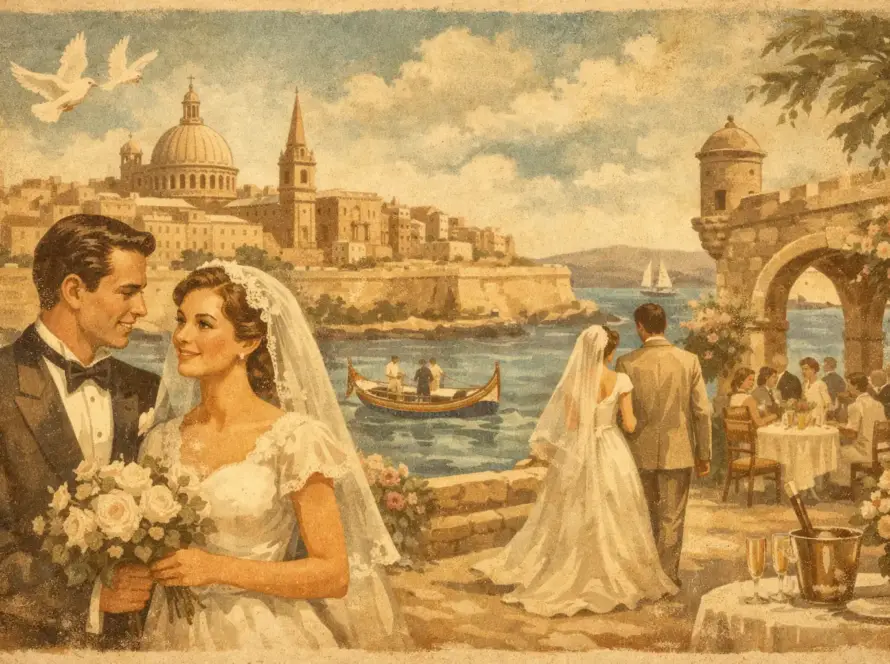
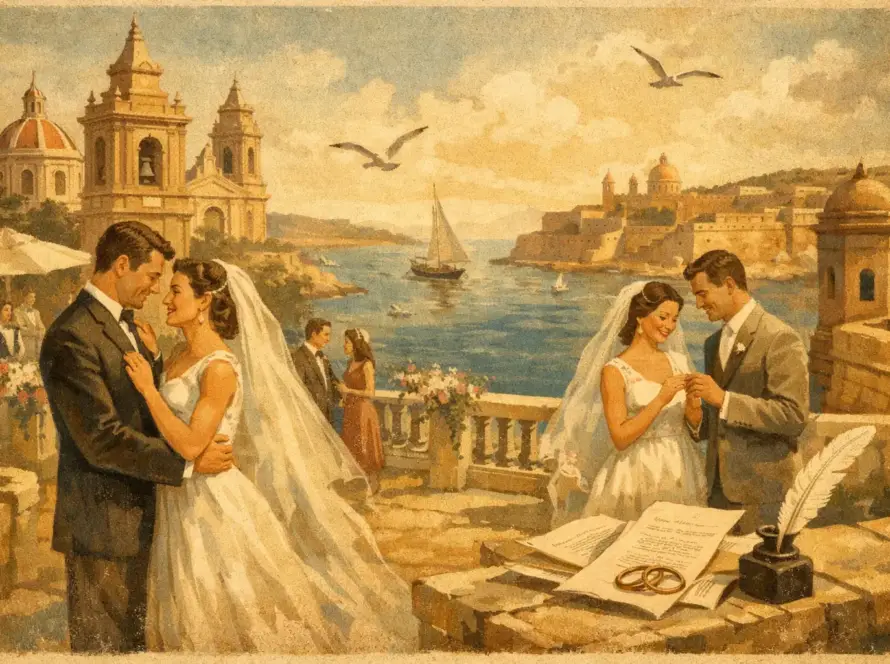
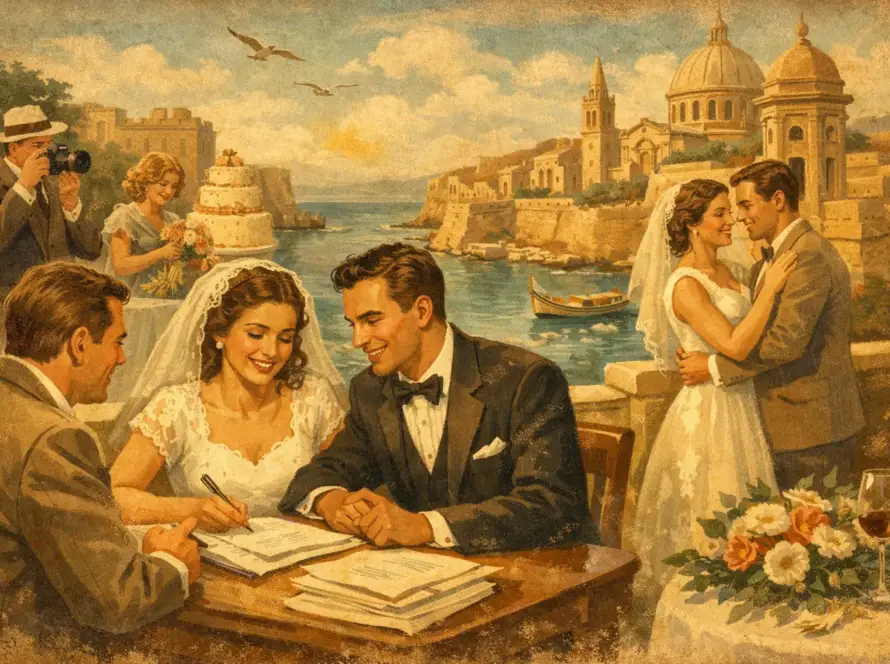
A candlelit courtyard beneath honey-coloured limestone, a grand palazzo staircase for your first photographs, sea air drifting through ancient fortifications – Malta’s historic settings can make a wedding feel wonderfully cinematic. Yet the most beautiful room is not always the right room. When you choose historic Malta venues, the real question is whether the setting can hold the celebration you have imagined, with comfort, flow and every meaningful moment properly cared for.
For couples planning from abroad, the choice is about more than a striking view. It is about finding a place whose character reflects your story, while ensuring your guests are looked after and the day runs with grace. Malta offers extraordinary variety in a remarkably compact island setting, from Baroque palazzi and fortified cities to rural estates and centuries-old gardens. The secret is knowing what to ask before you fall in love with a photograph.
Begin with the feeling you want guests to remember
Historic venues arrive with their own personality. A private palazzo may feel refined, intimate and richly romantic, with frescoed rooms and a courtyard that suits a stylish dinner. A fortified venue overlooking the Grand Harbour can create a more dramatic, ceremonial atmosphere. A restored farmhouse or country estate may bring warmth, soft countryside light and a relaxed Mediterranean pace.
Rather than beginning with a long list of buildings, begin with the experience. Do you picture a formal black-tie celebration, an elegant garden reception, or a long table under the stars with the people you love most? Consider how you want the day to move from ceremony to drinks, dinner and dancing. The right setting should support that rhythm naturally, not require guests to be repeatedly moved or left waiting between moments.
It also helps to decide how much of the venue’s history you want to see in the design. Some couples choose a clean, contemporary floral scheme that lets original stonework take centre stage. Others embrace the setting with antique-inspired stationery, warm candlelight, textured linens and deep, romantic colours. Neither approach is more correct. The most memorable celebrations feel considered because the styling, the space and the couple belong together.
Choose historic Malta venues with guest comfort in mind
Old buildings have a magic that modern spaces cannot imitate, but they can also have practical limitations. This is where thoughtful planning matters. Beautiful stone courtyards may have uneven surfaces; grand upper rooms may be reached by stairs; thick historic walls can affect mobile signal and sound. These details do not make a venue unsuitable, but they do shape the event plan.
Ask early about accessibility for guests with limited mobility, including step-free routes, suitable toilet facilities and where cars can drop people close to the entrance. If you are inviting older relatives or guests travelling with young children, shade, seating and short walking distances deserve as much attention as the ceremony backdrop.
Malta is blessed with generous sunshine, especially across the main wedding season. For an outdoor ceremony or reception, look beyond the view and ask where shade will fall at your chosen time. A late-afternoon ceremony can be kinder for guests and more flattering for photographs, particularly in summer. You will also want a calm, credible wet-weather plan. A covered courtyard, an elegant interior room or a well-designed marquee arrangement can protect the atmosphere without feeling like an afterthought.
Think beyond the ceremony space
Many historic properties photograph beautifully from one angle, yet a wedding is a sequence of experiences. Consider where guests will arrive, enjoy a welcome drink, gather for the ceremony, take photographs, dine and dance. Is there a quiet place for the couple to take a breath together before the reception begins? Is there a comfortable dressing area? Can musicians, caterers and florists access the site discreetly?
A venue with separate, well-proportioned areas often creates an effortless sense of occasion. Guests feel that each chapter of the day has been revealed especially for them. In a smaller venue, the same effect can be created through intelligent styling, lighting and carefully timed transitions.
Understand capacity, timing and sound restrictions
Historic Malta venues often have firm conditions designed to protect the building, its neighbours and its heritage. These may include guest-capacity limits, restrictions on open flames, particular supplier access hours or a set time for music to end. Such rules are entirely manageable when they are understood from the beginning. They become stressful only when they emerge after invitations have been sent or a band has been booked.
Be candid about your guest count before viewing spaces. A room that is charming for 60 can feel crowded at 90 once dining tables, a dance floor, entertainment and service space are included. Conversely, a majestic hall can make an intimate group feel lost unless the layout is carefully designed. Request plans that show a realistic dinner setup, not just the maximum standing capacity.
Sound deserves special attention. Courtyards and stone walls can create wonderfully atmospheric acoustics for a string quartet or acoustic ceremony music, but they may also amplify a live band in unexpected ways. Find out whether the venue has a decibel limit, a curfew or preferred entertainment arrangements. If dancing is central to your celebration, make sure the party can continue in a suitable space after any outdoor music restriction begins.
Let the light and season guide your choice
Malta’s light is one of its great gifts: bright, clear and golden against the island’s pale limestone. It is also a reason to choose your venue with your date in mind. Summer weddings may call for shaded courtyards, indoor dining options and later timings. Spring and autumn can be wonderfully temperate, with gardens and terraces offering their best balance of comfort and colour. Winter celebrations can be deeply elegant in a palazzo, where fireplaces, candlelight and richly dressed interiors create a sense of intimacy.
Visit at a similar time of day to your planned ceremony whenever possible, or ask for recent imagery from that period. Notice where the sun sits, how the entrance looks after dark, and whether the dining area needs additional lighting. Historic architecture becomes even more evocative after sunset, but it needs a lighting plan that is flattering, safe and sympathetic to the building.
Protect the budget without compromising the occasion
Venue hire is only one part of the investment. Some historic spaces include furniture, lighting or a catering area; others require more production to become fully event-ready. Transport, power, generators, security, additional toilets, furniture hire and a weather contingency can affect the overall figure.
This is not a reason to avoid a remarkable venue. It is a reason to compare options by their complete event cost and not by hire fee alone. A slightly higher venue fee may offer a more polished guest experience and reduce the need for additional hire. Equally, a simpler historic property can be transformed beautifully when the budget is directed towards exceptional food, flowers and lighting.
For couples arranging their celebration from another country, local knowledge makes these comparisons far clearer. Dream Days can help you weigh a venue’s beauty against the practical details, recommend trusted suppliers and ensure your budget is aligned with the experience you want to create.
Ask the questions that reveal how a venue really works
Before reserving a date, ask who will be present on the day and what they are responsible for. A venue manager may oversee the property, while your wedding planner coordinates suppliers, timings and the guest experience. Understanding that distinction avoids gaps in responsibility.
You should also confirm catering arrangements, bar service, supplier policies, setup and breakdown windows, parking or coach access, and any requirements for candles, confetti or décor installation. If you are planning a legal ceremony on site, consider the ceremony location in relation to privacy, paperwork and the timing of your registrar. Historic venues can be flexible, but their flexibility must be planned rather than assumed.
Finally, trust the response you have when you imagine your people there. The right venue is not simply the one with the most impressive façade. It is the one where your grandmother can sit comfortably, your friends can celebrate freely, and you can look across the room during dinner and recognise your own love story in every detail.
A historic Malta venue gives your wedding a sense of place that guests will carry home with them. Choose the setting that feels beautiful, certainly, but also choose the one that allows your celebration to unfold with ease. That is where heritage becomes something more personal: the beginning of a memory that belongs entirely to you.